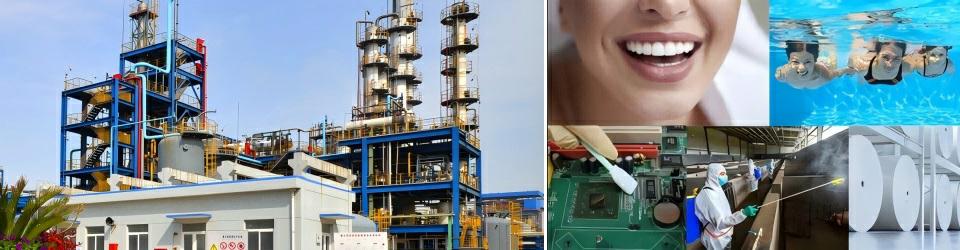
Pottasium Monopersulfate Compound ( also name : MPS or KMPS or OXONE or Virkon )
- CAS number: 70693-62-8
- Molecular formula: K2SO4.KHSO4.2KHSO5
- Appearance: White powder
- Purity: 42.8% (KHSO5)
- Hazard class: 8
- UN No.: 3260
Applications of KMPS and How Its Chemistry Works in Each
1. Water Treatment
In water treatment processes, KMPS is used to oxidize a variety of organic and inorganic pollutants. For example, KMPS can oxidize iron (Fe²⁺) and manganese (Mn²⁺) in water, converting them into insoluble oxides (Fe³⁺ and Mn³⁺), which can be easily filtered out. Additionally, KMPS is effective at reducing chemical oxygen demand (COD) and biological oxygen demand (BOD) by breaking down complex organic compounds in wastewater.
The release of oxygen radicals during hydrolysis allows KMPS to react with and oxidize these pollutants, improving the quality and safety of the treated water.
2. Pool and Spa Maintenance
KMPS is commonly used as a non-chlorine oxidizer in pools and spas. Its oxidizing power allows it to break down organic contaminants like sweat, body oils, and cosmetics without the production of harmful chloramines, which are known to cause skin and eye irritation. In this application, the oxygen radicals generated by KMPS effectively neutralize these contaminants, keeping the water clean and clear.
3. Environmental Remediation
In environmental cleanup efforts, KMPS is used to treat contaminated soils and groundwater. It is especially effective in oxidizing organic pollutants like hydrocarbons and volatile organic compounds (VOCs), which are often found at contaminated industrial sites. When applied to contaminated environments, KMPS generates reactive oxygen species that break down these pollutants into less harmful or inert substances, aiding in the restoration of the site.
4. Industrial Cleaning and Biofilm Control
KMPS’s strong oxidizing properties make it ideal for industrial cleaning applications, including disinfection and biofilm control in water systems. In these settings, KMPS is used to oxidize organic materials and microorganisms, breaking down biofilms and ensuring a clean and safe environment. The reactive oxygen species generated by KMPS disrupt the structure of biofilms, preventing their formation and maintaining the efficiency of water systems like cooling towers and heat exchangers.
Why KMPS is Safer and More Environmentally Friendly
One of the key advantages of KMPS is that it is a chlorine-free oxidizer. Chlorine-based oxidizers are known to produce harmful byproducts, such as chloramines and trihalomethanes, which can have negative impacts on human health and the environment. KMPS, on the other hand, breaks down into harmless sulfate ions and oxygen, making it a much safer alternative for both the environment and human health.
Moreover, KMPS operates effectively across a wide range of temperatures and pH levels, making it versatile and adaptable for various industrial and commercial applications.
Conclusion
Potassium Monopersulfate (KMPS) is a powerful, versatile, and environmentally friendly oxidizer with a wide range of applications. Its chemistry, centered around the reactive oxygen species generated from the breakdown of the peroxymonosulfate anion, allows it to effectively oxidize contaminants in water treatment, pool maintenance, environmental remediation, and more. As industries continue to move toward more sustainable and safer chemical alternatives, KMPS stands out as an ideal solution for oxidation processes that require both efficiency and environmental responsibility.
If you’re looking for a reliable, non-chlorine oxidizer for your industrial or commercial needs, consider the powerful chemistry behind KMPS. It offers the oxidizing strength needed to get the job done while being safer for people and the environment.
Interested in learning more about how KMPS can benefit your industry? Contact us today to discuss your needs or request a sample!
Factory Address : HI-TECH Chemical Indsutry Park, Leping City, JiangXi, China
CONTACT : sales@potassium-monopersulfate.com